
If you’re researching lead generation business model, this breakdown covers what actually matters for a solo operator.
“`html
Lead Generation Business Model — How the Money Works and What Infrastructure You Actually Need
The lead generation business model has gained significant traction in the digital landscape in recent years. As a solopreneur with over 20 years of experience in construction supply and nearly a decade in running digital businesses, I’ve seen firsthand how effective lead generation can drive revenue. In this post, I’ll break down how the lead generation business model works, where the money comes from, and what infrastructure is necessary to run it successfully. We’ll explore various revenue structures, the importance of lead quality, and how tools like GoHighLevel can enhance your operations.
Understanding the Revenue Structures in the Lead Generation Business Model
The lead generation business model incorporates various revenue structures that dictate how you get paid for your services. Each model has its pros and cons, making it essential to choose one that aligns with your business strategy and target market. Let’s examine the three primary revenue structures:
1. Pay-Per-Lead
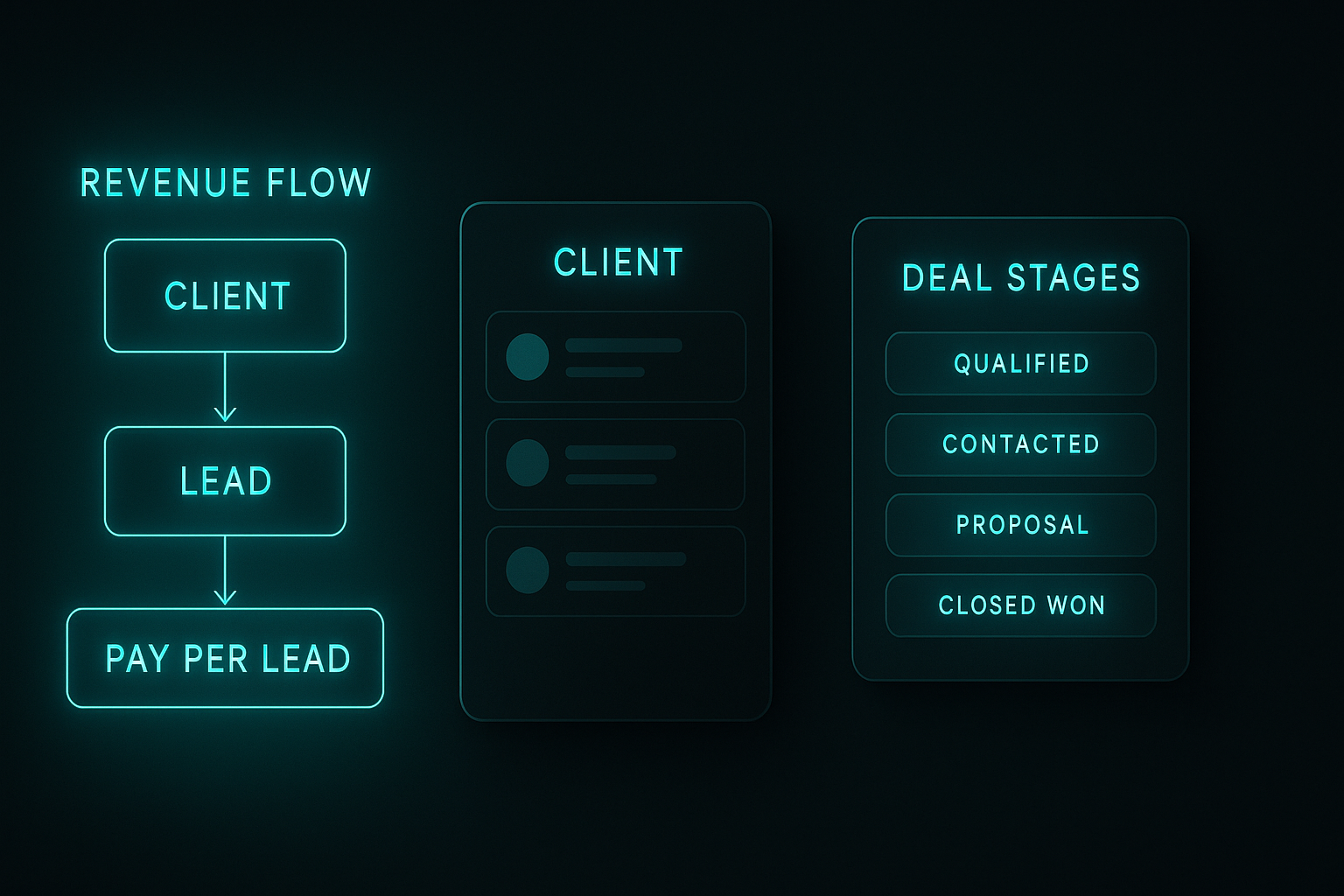
In the pay-per-lead structure, you charge clients based on the number of qualified leads you deliver. This model is popular due to its straightforward nature. You provide leads that meet specific criteria and charge clients for each lead. This structure works well if you can ensure that the leads are genuinely valuable — organizations are willing to pay for high-quality leads that convert to paying customers.
2. Pay-Per-Appointment
The pay-per-appointment model operates on a similar principle, but payment is made only when a lead shows up for a scheduled appointment. This approach typically has a higher ticket price, which can lead to larger paydays, but it requires a higher level of coordination and lead nurturing. Clients may prefer this model as it emphasizes lead quality since they only pay for leads that engage with their business directly.
3. Retainer
Another common revenue structure is the retainer model, where clients pay a flat monthly fee for a consistent supply of leads. This model is beneficial for agencies that want predictable cash flow while providing ongoing services. At a retainer level, you can build long-term relationships with your clients, fostering loyalty and potentially upselling additional services as you progress.
Margins: How Lead Generation Businesses Generate Profit
One of the standout features of the lead generation business model is the high margins it can offer. Unlike traditional service-based businesses that often incur substantial overhead costs, lead generation primarily involves the investment of time and money towards acquiring leads, especially with online advertising.
Your main expenses will generally come from:
- Ad Spend: If you’re using paid advertising to generate leads, this will be your most significant variable cost. Learning to optimize ad spend while maximizing lead quality is crucial.
- Time: The time you invest in building landing pages, nurturing leads, and managing client relationships can be considerable. Automating these processes can lead to substantial savings.
Effectively managing these costs can lead to impressive profit margins, often upwards of 70% in some cases. Thus, understanding how to streamline your processes and optimize ad performance is key.
Essential Infrastructure for a Lead Generation Business
Running a successful lead generation business requires strategic planning and effective infrastructure. Here are some key components necessary for success:
1. Customer Relationship Management (CRM)
A well-designed CRM helps you track the leads you generate, monitor how they progress through the sales funnel, and manage communication with clients. It ensures that every lead is followed up and nurtured, optimizing your chances of conversion.
2. Landing Pages
High-converting landing pages are crucial. They need to be designed with clear calls to action and optimized for capturing visitor information effectively. A/B testing may also be required to identify what works best.
3. Automation Tools
Automation tools are essential for nurturing leads through email campaigns and other forms of communication. These tools can ensure that your leads receive timely information, increasing the likelihood of conversion.
4. Reporting Tools
Clients will want to understand the return on their investment (ROI). Tools that produce detailed reports can help you show clients how the leads perform, providing reassurance regarding their investment.
All of these components can integrate well with platforms like GoHighLevel, which is designed specifically for agencies implementing a lead generation business model. With features including CRM capabilities, landing page builders, automated workflows, and white-label reporting, it provides the necessary infrastructure for a thriving lead generation business.
Scaling the Business Model: Solo Operator vs. Small Team
The scale of your operations can significantly impact your lead generation business model. Whether you’re a solo operator or you’ve chosen to build a small team, the strategies can vary:
Solo Operator
A solo operator typically relies heavily on automation and streamlined processes to manage lead generation. The focus should be on minimizing manual effort while prioritizing high-value tasks, such as optimizing ad performance or enhancing customer interactions.
Small Team
If you’re running a small team, responsibilities can be divided among members, allowing for more specialized roles. This division can lead to increased efficiency since one person can focus on generating leads, another on nurturing them, and yet another on client management. However, this larger scale may also introduce more complexity that requires sophisticated systems and better communication strategies.
Both setups can be profitable, but as you scale, investing in tools like GoHighLevel becomes increasingly vital for maintaining oversight, tracking performance, and ensuring that leads are managed properly across multiple touchpoints.
Quality of Leads is Paramount
In the lead generation business model, the quality of the leads you provide is crucial. Charging clients per lead remains sustainable only if those leads are genuinely valuable. Here’s how to ensure lead quality:
Defining Lead Quality Upfront
Before beginning a lead generation campaign, it’s essential to define what “qualified leads” mean for each client. Each business serves different demographics, and what qualifies as a good lead in one industry may not apply in another. Conduct thorough consultations with clients to define characteristics such as:
- Demographics
- Budget
- Behavioral attributes
Establishing clear criteria not only helps in curating the right leads but also sets expectations with your clients. This approach can prevent misunderstandings and build stronger partnerships as clients will know exactly what to expect regarding lead quality.
Building Your Lead Generation Business
The lead generation business model offers numerous opportunities for earning potential, driven by various revenue structures, optimized margins, and valuable tools like GoHighLevel. Whether you’re operating alone or planning to form a small team, establishing lead quality and streamlining operations will be your cornerstones for success.
If you want to have the infrastructure sorted before you launch, consider GoHighLevel’s 14-day trial — it’s designed for this specific model.
By understanding how money flows within the lead generation business model and what infrastructure is necessary, you’ll be well-equipped to build a profitable business in this fast-moving online landscape.
If you want the infrastructure piece sorted before you launch, GoHighLevel’s 14-day trial is worth running first — it’s built for this exact model.
Margins by Revenue Structure: Which Lead Generation Business Model Pays Best
The lead generation business model offers flexibility in how revenue is structured. Three common models are pay-per-lead, pay-per-appointment, and retainer agreements. Each has its pros and cons, making them more or less suitable depending on your circumstances and goals.
Pay-per-lead is popular among solo operators. You might charge around $20 per lead. If you generate 100 leads in a month, that’s $2,000. However, you need a solid source of quality leads to ensure conversion rates are favorable.
Pay-per-appointment typically offers higher payouts, averaging around $100 per appointment set. If you manage to book 20 appointments in a month, you’re looking at $2,000 as well but with potentially higher success rates in closing deals, depending on your sales skills and the industry.
A retainer model can offer steady income but requires considerable trust from clients. A monthly retainer could be around $1,500 for ongoing lead generation efforts. This model is beneficial for more seasoned operators or small teams who can demonstrate consistent value to their clients and may suit those looking to stabilize their income streams.
For solo operators, the pay-per-lead model might be the easiest entry point. However, as your skills and reputation grow, transitioning to a pay-per-appointment or even retainer model can maximize your income potential.
Defining Lead Quality Upfront With Clients
To minimize disputes and set clear expectations, a one-page agreement is essential. This document outlines what constitutes a quality lead and what you promise to deliver. Include specifics such as target demographic, expected conversion rates, and the responsibilities of both parties.
A key aspect of your agreement should define lead quality. For example, state that a quality lead must meet specific criteria like being in the designated geographic area, possessing a certain budget range, and having a defined need for the service. By putting this in writing, you reduce ambiguities that can lead to frustration later on.
, establishing clear communication throughout your engagement helps maintain a healthy working relationship. Ensure both you and your clients revisit this agreement periodically to keep expectations aligned.
Scaling: From Solo to Small Team
As you transition from a solo operation to a small team in the lead generation business model, several changes occur. You will need to delegate tasks, such as lead sourcing and appointment setting. However, your core strategies for generating leads and quality control measures will largely remain the same. Keeping consistency in processes and lead evaluation will ensure your output doesn’t suffer as you grow. It’s essential to maintain the personal touch and proven processes that brought you success as a solo operator while effectively managing a team.
Disclosure: If you use my affiliate links, I earn a commission at no extra cost to you.
Worth reading alongside this: pipeline automation — covers the automation layer that pairs well with a lead gen stack.
“`