
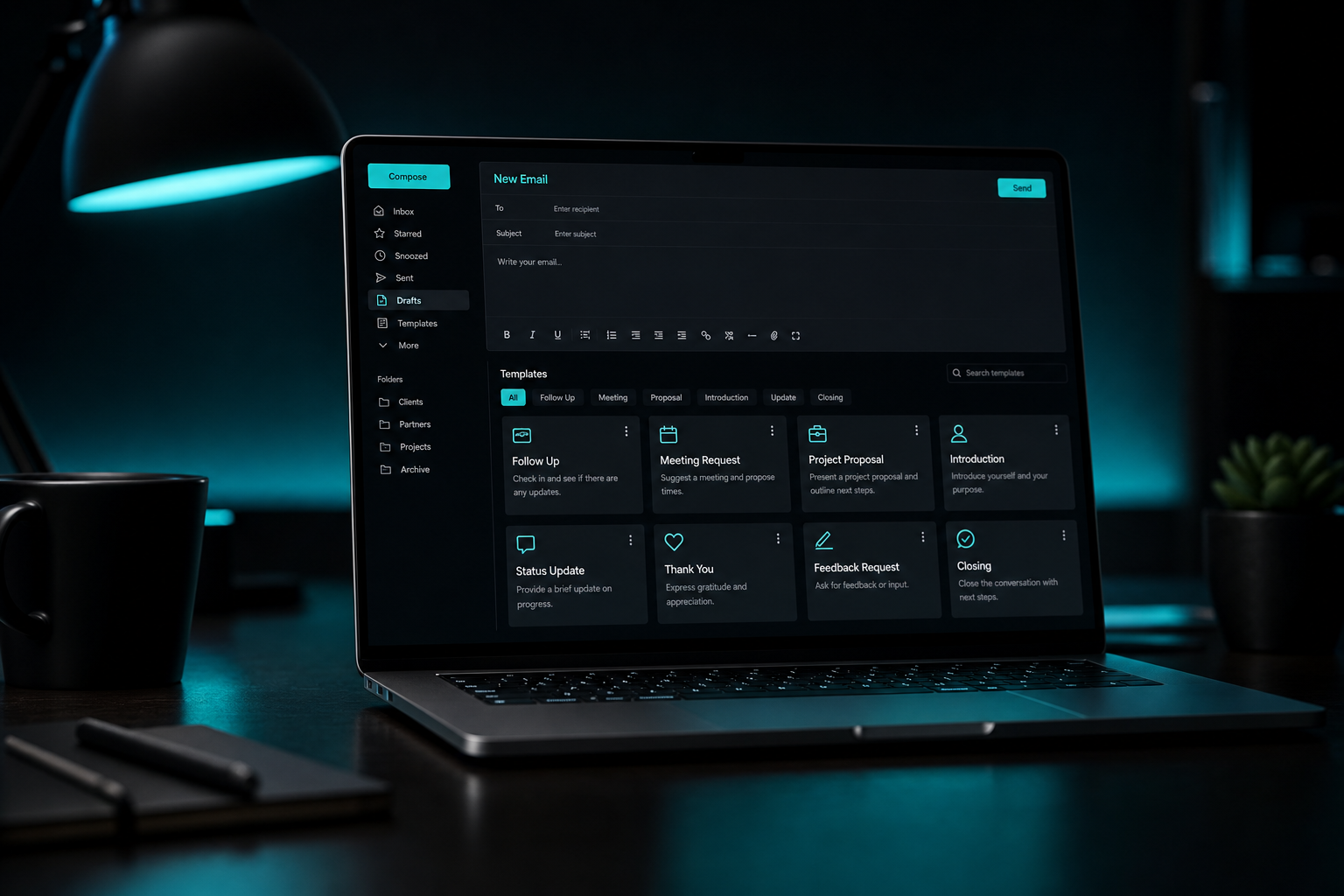
Stop Rewriting the Same Client Emails — Use These Freelance Templates Instead
I was writing a payment reminder for a client who was three weeks past due. Not the first time I’d written one. Not the fifth time either. But I was sitting there rewording the same message I’d sent before — trying to sound firm but not hostile, professional but not corporate — and it hit me that I’d burned twenty minutes crafting freelance client email templates in my head that I’d never actually saved anywhere. Every time I needed one, I started from scratch. Same message, slightly different words, same low-grade dread about how it would land.
That’s the thing nobody warns you about when you start freelancing. The work itself isn’t the hard part. The communication around the work is what eats your time and your energy. Quoting a project, onboarding a new client, nudging someone about payment, pushing back on scope creep — these conversations happen constantly, and most of us just wing them every time. Having reliable freelance client email templates ready to go would have saved me hundreds of hours over the years.
Quick answer:
- The Messages Every Freelancer Rewrites From Scratch.
- Why I Turned My Freelance Client Email Templates Into a Pack.
- What This Pack Doesn’t Do.
- How I Actually Use These Freelance Client Email Templates Day to Day.
- Seven Dollars Is the Right Price for This.
The Messages Every Freelancer Rewrites From Scratch
I started keeping a list of the messages I was writing over and over. It was longer than I expected:
- Initial project quote with scope boundaries
- Onboarding welcome email (what I need from you, timeline, how this works)
- Scope change request — the “this wasn’t in the original agreement” message
- Payment reminder — the polite first nudge
- Payment reminder — the less polite second nudge
- Project delay notification (when the delay is on your end)
- Project pause or wrap-up confirmation
- The “we need to part ways” email
Every one of those is a message where the wrong tone costs you money or a relationship. The payment reminder that sounds too aggressive and the client ghosts. The scope creep response that’s too soft and you end up doing forty percent more work for the same price. The onboarding email that forgets a key detail and you’re chasing information for two weeks.
If you’ve been through the freelance client onboarding kit, you already know how much smoother projects run when the first interaction sets clear boundaries. But onboarding is just one touchpoint. The communication doesn’t stop after the kickoff email — it’s the entire lifecycle of a project.
Why I Turned My Freelance Client Email Templates Into a Pack
After enough copy-paste-edit cycles, I finally sat down and wrote proper templates for each of those messages. Not corporate boilerplate with “[INSERT CLIENT NAME HERE]” placeholders and stiff language. Actual messages I’d tested on real clients, worded the way a real person talks when they’re trying to be professional without sounding like an HR department.
The Client Communication Templates Pack is that collection. It covers the full arc from quoting to wrap-up, including the uncomfortable ones — payment follow-ups, scope pushback, and project termination. Each template has a short note on when to use it and what to customize, because context matters more than perfect wording.
Here’s what’s in it:
- Quoting and proposal templates — clear scope, clear price, clear boundaries up front
- Onboarding sequences — welcome email, information-gathering checklist, timeline confirmation
- Scope management scripts — how to say “that’s additional work” without torching the relationship
- Payment reminders — a graduated sequence from friendly nudge to firm final notice
- Project lifecycle messages — updates, delays, pauses, completions
- Exit scripts — ending a project or a client relationship cleanly
What This Pack Doesn’t Do
I want to be straight about the limitations. These are templates, not contracts. They don’t replace having an actual freelance agreement with payment terms and scope definitions. If you don’t have a contract in place, no email template is going to save you when a client decides they don’t owe you anything.
No set of freelance client email templates is magic words that guarantee a client pays on time or respects scope boundaries. Some clients are just difficult, and a well-written email doesn’t fix that. What it does fix is the thirty minutes you’d spend agonizing over the wording, the second-guessing about whether you sounded too pushy or too passive, and the inconsistency that comes from improvising every time.
If you’re dealing with chronic scope creep, templates help you respond faster and more consistently — but the real fix is learning to say no and pricing your work so that the occasional overrun doesn’t sink you.
How I Actually Use These Freelance Client Email Templates Day to Day
I keep them in a folder I can pull up in thirty seconds. When a situation comes up — new project inquiry, overdue payment, a client asking for something outside scope — I grab the right template, swap in the specifics, and send. The whole thing takes two minutes instead of twenty.
The biggest value isn’t the time saved per email. It’s that I actually send the messages now. Before I had templates, I’d put off uncomfortable conversations because I didn’t want to deal with the writing. The scope creep email would wait a week while I did the extra work and quietly resented it. The payment reminder would wait until I was frustrated enough to draft something too blunt. Having a pre-written version with the right tone means I handle it immediately, while it’s still a small problem instead of a big one.
That’s the real pitch for having freelance client email templates on hand: they remove the friction between knowing you need to send a message and actually sending it.
Seven Dollars Is the Right Price for This
I priced the Client Communication Templates Pack at $7 because that’s about what one awkward hour of rewriting emails costs you in lost productivity. It’s not a course. It’s not a membership. It’s a file you download once and use until you’ve customized them enough to make them fully yours. No upsell, no drip sequence, no “premium tier.”
If you’re a freelancer or solopreneur who sends client emails regularly and you’ve caught yourself rewriting the same messages from memory, this saves you real time. If you’re just starting out and haven’t figured out what to say when a client misses a payment or creeps scope — having tested language ready to go is worth more than the price of a lunch.
If you grab it through my link, I do earn a small commission — but it costs you the same either way. I’m sharing what I built for my own use first; the link is there if it’s useful to you.
You can pick up the Client Communication Templates Pack here and stop rewriting the same emails from scratch every week.
About the author: Chris Myers builds AI-powered business systems and tests every tool in his own solopreneur stack before recommending it. He writes at Piscion Global.
Pingback: Complete Freelance Toolkit: Templates and Follow-Up for Solo Professionals