
Freelance Business in a Box — The Operating System for Running a Solo Business
I freelanced for a while before I realized I wasn’t running a business — I was just doing work and hoping to get paid for it. No standard way to quote projects. No contract clauses I actually understood. No freelance business toolkit for tracking what I earned or owed in taxes. Every new client was a scramble to figure out the admin from scratch, and the admin kept eating into the hours I was supposed to be billing.
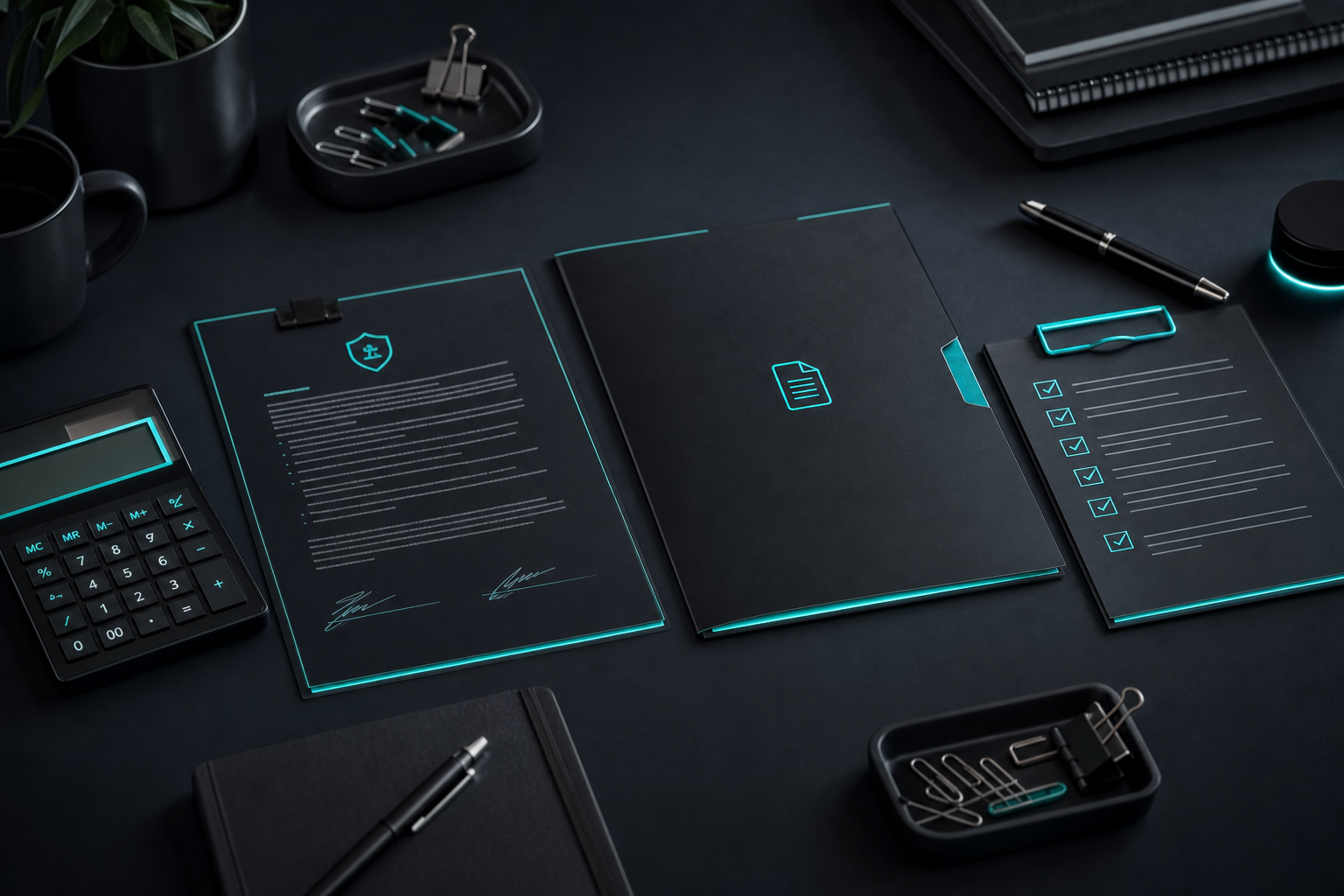
The turning point wasn’t learning a new skill or finding more clients. It was building a freelance business toolkit — a set of documents I could pull up for every recurring situation: pricing, proposals, onboarding, communication, contracts, finances, and growth planning. Once those were in place, the business side stopped being a time sink and started running on autopilot.
That’s what the Freelance Business in a Box is — every template, calculator, and checklist I built for myself, organized into one PDF you can set up in an afternoon and use indefinitely.
Quick answer:
- Why Most Freelancers Don’t Have a Freelance Business Toolkit.
- What’s Inside the Freelance Business Toolkit.
- Who This Freelance Business Toolkit Is For.
- What This Doesn’t Replace.
- Thirty-Nine Dollars for the Full System.
Why Most Freelancers Don’t Have a Freelance Business Toolkit
It’s not laziness. It’s that nobody teaches you the business side when you start freelancing. You learn your craft — design, development, writing, marketing — and then one day someone offers to pay you for it, and suddenly you need to figure out invoicing, contracts, taxes, and client management on the fly.
Most freelancers cobble together their systems over years of trial and error. A pricing spreadsheet here, a proposal template borrowed from a blog post there, tax advice from a Reddit thread. It works, but it’s slow and full of gaps. You don’t discover you need a kill fee clause until a client cancels after you’ve done eighty percent of the work. You don’t realize you need a scope creep script until you’ve already done twenty hours of free revisions.
A proper freelance business toolkit gives you all of those tools on day one — before the expensive lessons teach you why you needed them.
What’s Inside the Freelance Business Toolkit
Seven sections covering the full lifecycle of running a freelance business. Every section has fill-in templates with [BRACKET] placeholders — swap in your details, save it, and use it. No theory chapters. No motivational padding.
Pricing Calculator
A worksheet that backs into your real hourly rate based on your income goal, monthly expenses, and actual billable hours. Most freelancers guess their rate based on what feels right or what competitors charge. This worksheet forces you to do the math, and the math usually says you’re undercharging.
Also includes a comparison table showing when hourly, project-based, and retainer pricing each make sense — and a script for raising your rates with existing clients without torching the relationship.
Proposal Template System
Three proposal templates scaled by project size: a one-page Quick Proposal for projects under $2K, a three-page Standard Proposal for projects up to $10K, and a five-page Premium Proposal for $10K+ engagements with tiered pricing options. Each one has sections for scope, timeline, deliverables, pricing, and terms — all with bracket placeholders.
Plus a three-email follow-up sequence (day 2, day 5, day 10) for proposals that go silent. The follow-up is where most freelancers lose deals — not because the client said no, but because nobody asked again.
Client Onboarding System
A welcome packet framework, ten intake questions that prevent the “I didn’t know you needed that” conversations, a contract checklist, and a kickoff meeting agenda. If you’ve used the Freelance Client Onboarding Kit, the approach here is similar — condensed into the essentials that matter most for a smooth first week.
Client Communication Scripts
The ten most-used freelancer messages: welcome emails, weekly updates, scope creep responses, payment reminders, revision limits, testimonial requests, referral asks, dealing with unresponsive clients, and project close. These are condensed from the full Client Communication Templates Pack — enough to cover the critical situations without duplicating the full twenty-five template collection.
Contract Clause Library
Fifteen essential contract clauses written in plain English: scope of work, payment terms, revision limits, kill fee, intellectual property transfer, NDA, non-compete, liability cap, indemnification, dispute resolution, and more. Each clause includes what it means in plain terms, when to use it, and sample language you can paste into your agreements.
The Red Flag Checklist at the end lists five contract terms you should never accept — the kind of clauses that clients slip in and freelancers sign because they don’t want to seem difficult. One warning from experience: always read the IP clause. I’ve seen contracts where signing meant the client owned everything you created during the engagement period, including work for other clients.
Financial Tracking and Tax Prep
A monthly income and expense tracking framework, a quarterly estimated tax worksheet with the self-employment tax breakdown, a table of deductible versus non-deductible expenses, and a twelve-item year-end tax prep checklist. The thirty-percent rule — set aside thirty percent of every payment for taxes — is the single piece of financial advice that would have saved me the most stress in year one. This section builds on that with the actual math and structure.
Freelance Growth Playbook
A twelve-month rate raise timeline, steps for transitioning from hourly to project-based pricing, three retainer models with price ranges, a referral system you can set up in one email, client red flags to watch for, and a comparison table for deciding when to subcontract versus stay solo. This is the section that takes you from “I have clients” to “I have a business.”
Who This Freelance Business Toolkit Is For
Designers, developers, writers, marketers, consultants — any freelancer or solopreneur who does client work and doesn’t have their business systems locked down. It’s especially useful if you’re in your first two years and still building processes from scratch, but experienced freelancers who’ve been winging the admin side will find gaps they didn’t know they had.
If you only need communication templates, the Client Communication Templates Pack at $7 covers that. If you need a content system for marketing yourself, the Content Planner + AI Prompt Pack handles that for $9. But if you want the full operating system — pricing, proposals, contracts, finances, growth — this is the one that covers everything.
What This Doesn’t Replace
This is not legal advice. The contract clauses are starting points that have worked for me, but you should have a lawyer review any agreement before you sign it — especially for high-value engagements. The tax section gives you a framework for tracking and estimating, but it doesn’t replace a CPA. When your freelance income crosses a threshold where mistakes get expensive, hire professionals for both.
It’s also not a course on how to find clients. This freelance business toolkit assumes you have work (or are about to) and need the systems to run it professionally. If you’re still at the “how do I get my first client” stage, the $0 to First Sale Toolkit is a better starting point — it covers idea validation and launch strategy for getting your first paying customer.
Thirty-Nine Dollars for the Full System
The Freelance Business in a Box is $39. That’s less than one hour of most freelancers’ billable rate, and it sets up the systems you’ll use for every project going forward. Twenty-six pages of templates, calculators, scripts, and checklists — no fluff, no upsell, no subscription.
I built this because I needed it. The individual pieces took me years to figure out through expensive mistakes — underpricing, signing bad contracts, missing estimated tax payments, losing proposals I should have won because I didn’t follow up. If I could hand my past self one document before starting, this would be it.
Pick it up through this link if it’s useful to you. I earn a small commission if you buy through my link — same price either way.
About the author: Chris Myers builds AI-powered business systems and tests every tool in his own solopreneur stack before recommending it. He writes at Piscion Global.
Related Reading
- The Complete Freelance Toolkit: What Every Solo Professional Needs in One Place
- Stop Rewriting the Same Client Emails — Use These Freelance Templates Instead
Pingback: AI Operator Business System vs Chatbot Stack
Pingback: How AI Agencies Actually Make Money With Claude AI