
The Exact Tool Stack I’d Use to Build an AI Agency Today
If I were starting an AI agency from zero this week, my ai agency tool stack would be small enough to count on one hand. That’s not me being minimalist for its own sake — it’s that every tool you add is something you have to learn, maintain, and pay for, and most of them don’t earn their place. After building these systems for my own work, I’ve watched the bloated stacks collapse under their own weight while the lean ones kept running. So here’s the specific, opinionated list: five pieces, what each one is for, and how they fit together. No category roundups, no “it depends.”
Before the list, one honest caveat I covered in whether a solopreneur can even run an AI agent agency: tools don’t make the agency, delivery does. This stack is the delivery, not a shortcut around it.
1. The Backbone: Where the Agents Actually Live
Everything starts with the layer that runs the agents. This is the engine, and it’s the one piece you should not improvise. I’d build it from the AI Agent Build Blueprint for a single tight agent, and graduate to a full reusable backbone when a client needs more than one job handled. I walked through assembling exactly that in building an agentic stack for a client from scratch, and broke down the heavier version in my review of the Hybrid Agentic Stack Blueprint. If you want the no-overengineering version of a single agent, the build walkthrough is here.
2. The Client Front End: GoHighLevel
The agents do the work, but the client needs to see and touch something. That’s where GoHighLevel earns its spot — CRM, pipelines, calendars, and the messaging the client actually lives in, all in one place. For an agency serving small businesses, having the front end consolidated means you’re not duct-taping five subscriptions together for every client. It’s the part the client logs into and judges you by.
3. The Glue: Make
Between the agents and the client tools, you need something moving information back and forth without custom integration code for every connection. Make is the glue I’d reach for — visual, fast to wire up, and broad enough to connect the odd tool a client insists on keeping. The gohighlevel make ai agency combination covers most of what a small business actually asks for: capture the lead, route it, let an agent handle the first touch, log it where the owner can see it.
The AI Agency Tool Stack That Keeps You Profitable
Two pieces aren’t glamorous, and they’re the ones that decide whether this is a business or an expensive hobby. The first is cost control. Running agents costs real money, and an ai agency tool stack without spend visibility quietly bleeds margin. I’d run the LLM Cost Control Starter App from day one — I explained why in the real cost of running AI agents, but the short version is you can’t price a client you can’t measure.
The second is onboarding. A great stack with chaotic intake still feels like a mess to the client. I’d standardize the start with the Freelance Client Onboarding Kit so every engagement begins the same clean way — the full process is in how to onboard your first AI agency client. These two unglamorous pieces are what separate the operators who last from the ones who burn out in month three.
How the Five Pieces Fit Together
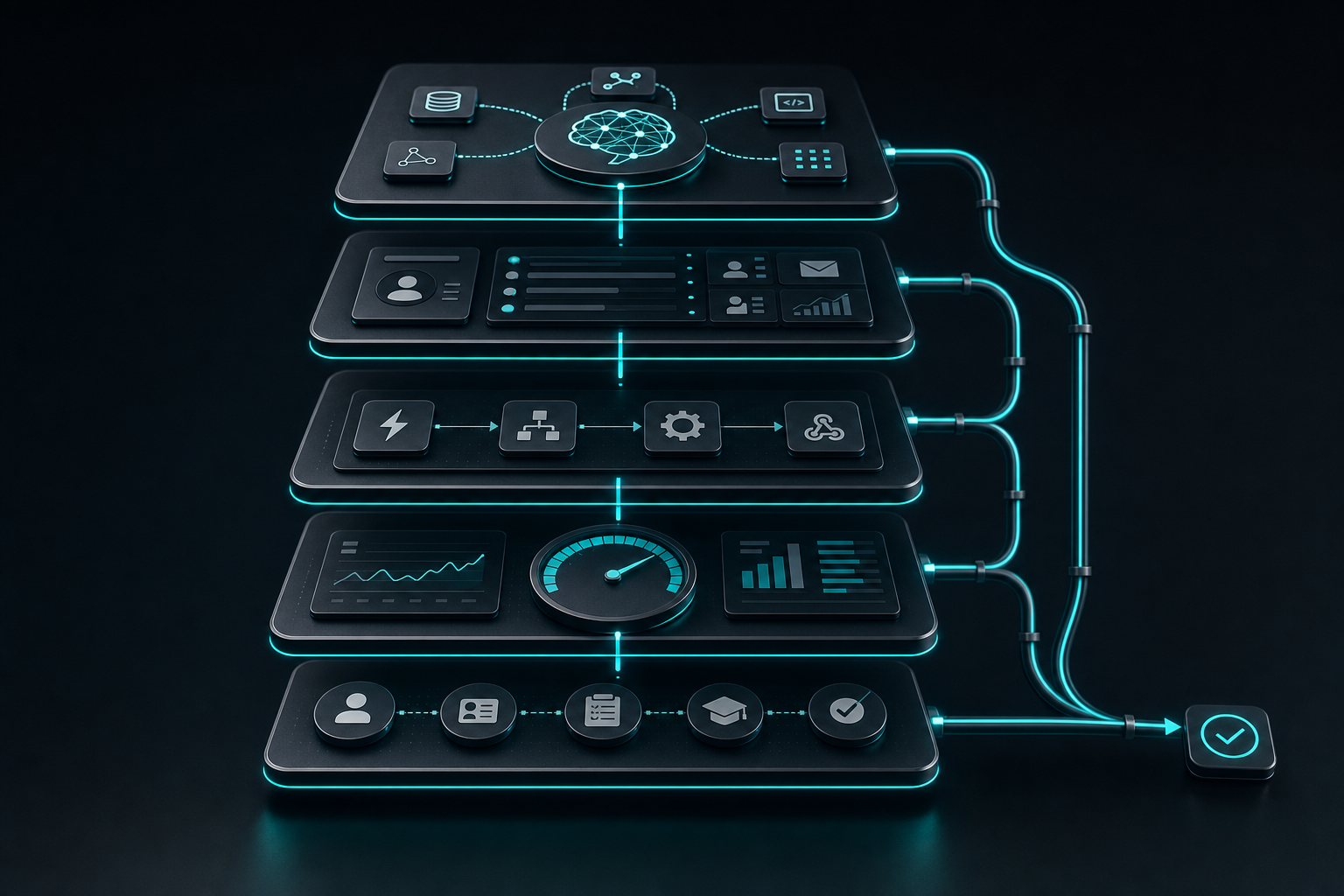
Walk a single lead through it. It arrives in GoHighLevel. Make routes it to an agent built on the AI Agent Build Blueprint, which qualifies it and drafts a reply. The cost tracker logs what that interaction cost. GoHighLevel shows the owner the whole thing happened. And the onboarding kit is the reason the client understood and agreed to all of it before you started. Five tools, one clean path, nothing redundant. That’s the whole ai agency tool stack — and it maps directly onto the five things a small business actually needs from an agent stack.
What I’d Deliberately Leave Out
Here’s what’s not in the stack: a second CRM “for flexibility,” a separate analytics platform, three different model providers, and whatever shiny tool launched last week. The fastest way to never ship an agency is to keep assembling tools instead of clients. If you’re choosing between adding a tool and signing a client, sign the client. You can always add the tool when a real need shows up — and if you keep good cost data, you’ll know exactly when that is. The discipline that keeps an ai agency tool stack lean is the same one that keeps the business profitable: add only what a paying client forces you to add. Every tool that isn’t pulling its weight is a subscription, a login, and a thing that can break at the worst moment — and you’re the only one on call to fix it. Real-world stacks also lean on solid infrastructure under all this; for the broader picture of running lean, the principles in the posts above hold up better than any single product.
For anyone weighing the whole thing as a business model, the honest tradeoffs live in what the underlying model usage actually costs — price accordingly and the stack pays for itself.
If you want the backbone the rest of this stack is built around, the AI Agent Build Blueprint is the $20 starting point I’d hand anyone building their first agent. The price is the same whether you use my link or go direct.
If you grab it through my link I earn a commission at no extra cost to you, and going direct is always fine. The stack above is the real answer either way — the link is just the shortcut to the first piece.
Want to build one yourself?
Here are the step-by-step guides from someone who actually runs an agentic system: